
5 trends we saw at FESPA Barcelona (and what we think they mean for print)
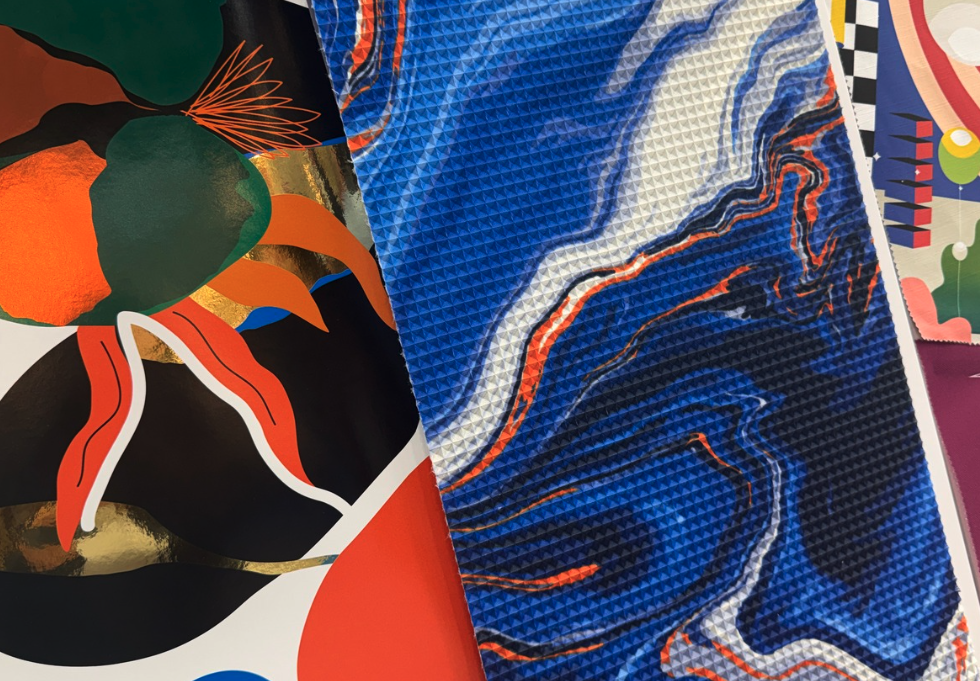
Tactile, textured, and dimensional print was everywhere at FESPA 2026
And just like that, another FESPA is under our belts! After a week of walking the halls, talking to exhibitors and visitors, supporting our fantastic partners, and trying very hard not to bring home every print sample we touched, it was clear to see that print is evolving in ways that enhance its ability to create a lasting and emotional connection.
This year’s show in Barcelona felt creative, energetic, and laser focused on helping print businesses explore new ways to stand out in competitive markets. Whilst there may have been fewer headline-grabbing machine launches than in previous years and more of a focus on updates and tweaks instead, there was certainly no shortage of innovation.
Here are five trends that stood out to us at FESPA 2026 in sunny Barcelona.
For us, tactile, elevated print definitely took centre stage
Everywhere you looked, exhibitors were using special effects, foiling, embossing, and dimensional print to create pieces that caught your eye, looked like pieces of art, and that you couldn’t help but touch too. Print applications felt immersive and experience-led, with vibrant expanded colour gamuts and neon shades making a comeback across signage, decor, packaging, and garments. The trend here seems to be print that feels premium, is memorable, and that expands beyond traditional substrates too.
Roland DG’s Dimense technology, for example, was being used to create textured wallpaper applications printed onto canvas materials. Canon’s elevated print technology, powered by the PRISMAelevate XL workflow software and the Arizona flatbed printer series, was being used to create stained glass windows, print that looked like an oil painting, and even a window that looked like it had rain drops on the glass. This trend is also being seen in the garment, DTF and DTG sector too and Stahls’ was showcasing its puff heat transfer vinyl for 3-dimensional DTF applications, designed to help products stand out, in response to this.
The variety of applications on show highlighted to us that print businesses are no longer thinking just in terms of what can be printed onto paper, but what can be printed on full stop.
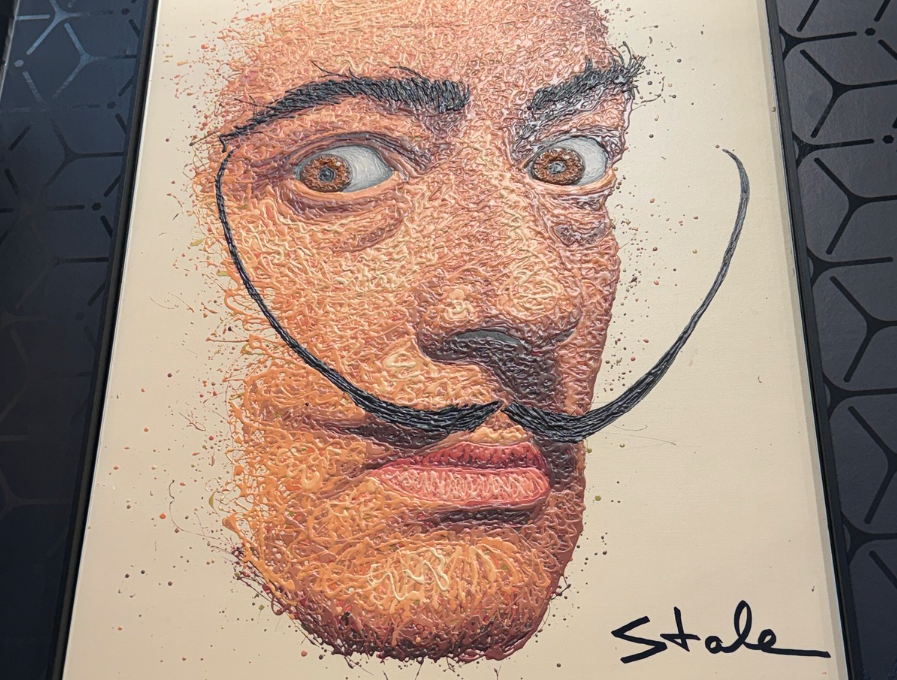
Canon’s PRISMAelevate XL workflow software and Arizona flatbed printer series can be used to create striking tactile print
2. Personalisation continues to drive demand
This leads us onto the next trend we saw - personalisation. We’ve been talking about the boom of personalised print for some time now and personalisation is being used by brands to stand out from competitors, as well as in retail to elevate the in-store experience (we even saw personalised T-shirt printing at the airport!). FESPA 2026 only reinforced that this trend is showing absolutely no signs of slowing down.
Live activations across the show floor enabled visitors to personalise products in real time, whether that was cookies, magnets, T-shirts, or other promotional items. Drinkware in particular is proving to be a hugely lucrative area for print businesses to tap into and KC Media partner Inkcups was showcasing how the print-on-demand nature of direct-to-object printing offers a number of benefits in this area of the market with Spanish-themed shot glasses, mugs, and other drinkware being showcased during the event.
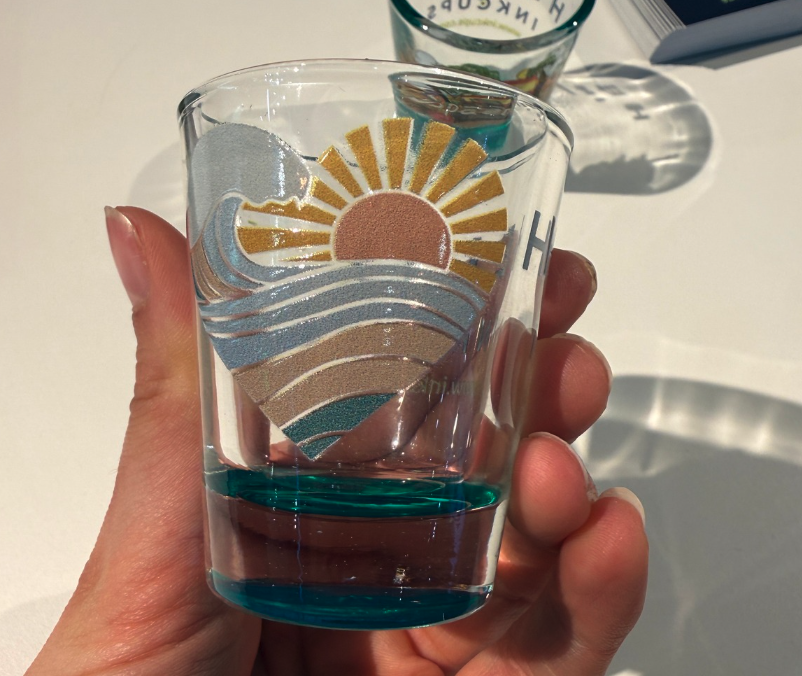
A shot glass printed using Inkcups’ Helix ONE® cylindrical DTO printer
When it comes to personalisation, a surefire way to stand out even more is to get creative with the item you’re printing on, and KC Media partner Antigro Designer, created a buzz with visitors by offering personalised cookies in partnership with Imago. These sweet treats were the talk of Hall 3 and we made sure to drop some by the FESPA Daily team to keep their energy levels high too whilst they were busy getting the show news out. (As some of the KC Media team have backgrounds in journalism, we can safely say that is no small feat!)
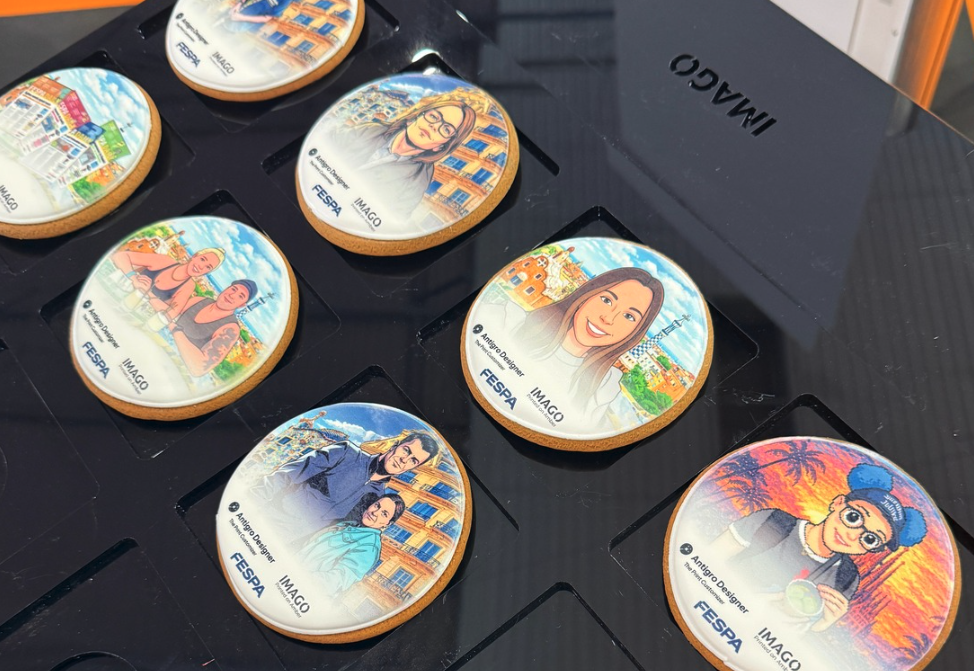
Antigro Designer’s print personalisation software and Imago’s edible printing technology was used to create custom cookies
3. Automation, software and AI took centre stage more than new hardware
One conversation we found ourselves having repeatedly throughout the week was the general feeling that hardware developments have reached a mature state. This meant that FESPA Barcelona felt less focused on new hardware per say but instead honed in heavily on solving operational challenges and production inefficiencies through hardware and software updates, the implementation of AI into workflows, expanded colour gamuts and more. OnPrintShop for example showcased its AI-powered web-to-print advancements and automation solutions, and AI was also present within the FESPA Conference schedule too with talks including ‘AI in Print Production Software: Your Most Productive Employee’.
This offering seemed to match what visitors were looking for with many conversations we had suggesting that buyers were more interested in finding ways to become more efficient than finding the next fastest printer - and they had plenty to explore because automation was everywhere. From workflow software and the latest robotics innovations to large-format finishing solutions and media roll lifters and storage from exhibitors including KC Media partner PLASTGrommet, there was a strong focus on solutions and services designed to help printers to reduce bottlenecks and remain competitive. Durst presented the first public Kyveris Sandbox, an autonomous smart factory concept connecting machines, jobs, materials and production all together with a focus on process optimisation and continuous analysis.
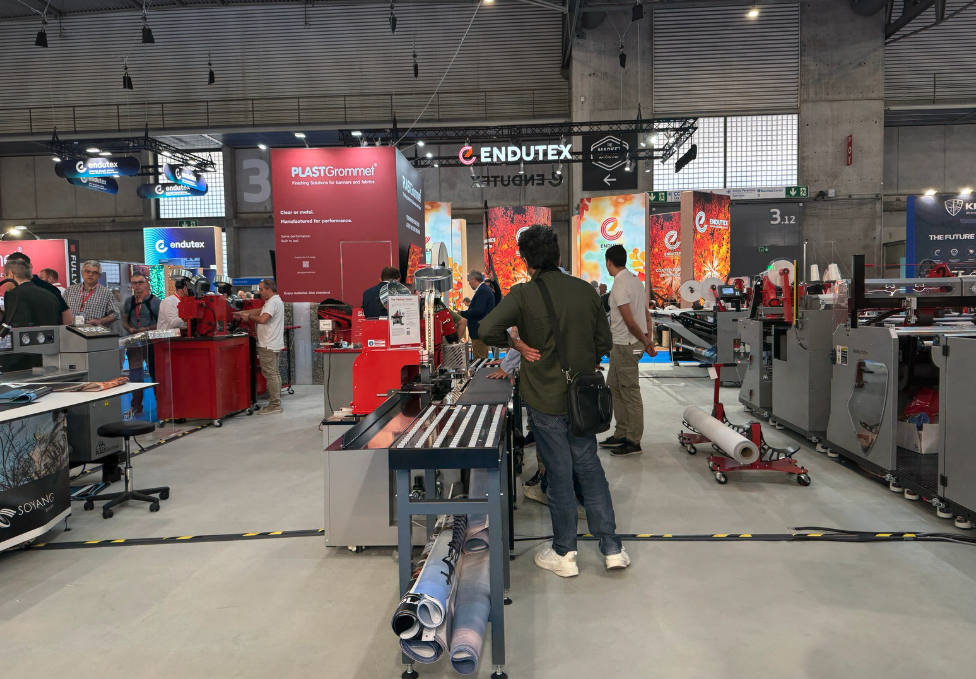
PLASTGrommet showcased its large-format finishing automation solutions across two booths
4. Sustainability messaging felt a little quieter but still present
One interesting shift we noticed this year was around sustainability messaging. In previous years and at other shows across the UK and Europe, sustainability is often felt front and centre, from cardboard-heavy stands to bold green (literally) environmental messaging across graphics and marketing collateral.
At FESPA 2026, sustainability was still there, but it felt more subtle. This year, creativity, visual impact and eye-catching applications seemed to dominate stand designs and exhibitor messaging more than sustainability-led branding. This is not necessarily to say that sustainability has become less important, but perhaps that it’s becoming more integrated into wider business strategies (hopefully!), rather than being positioned as the key marketing message. It’s also worth noting here that wider economic and geopolitical pressures, such as conflict involving Iran and disruption around the Strait of Hormuz, can place significant strain on supply chains and businesses, causing sustainability initiatives to take a back seat.
There were still strong sustainability conversations happening across the show floor though. Kavalan, for example, continued highlighting PVC-free materials and celebrated six businesses driving more sustainable wide-format applications through its Green Leader Awards, and FESPA itself is working to reduce exhibition waste with its FESPA Foundation initiative.
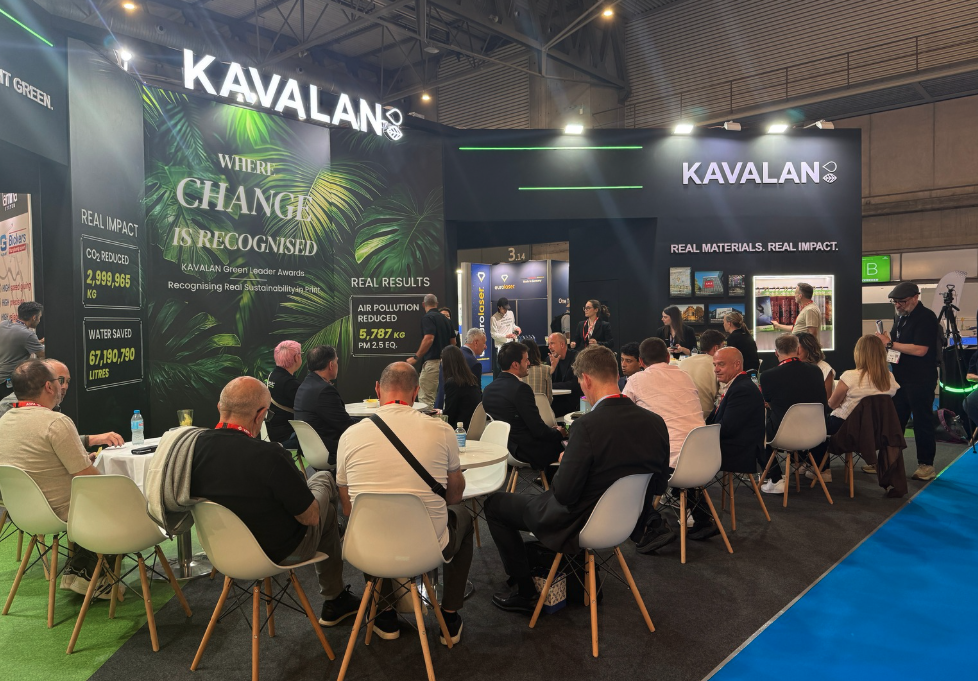
Kavalan celebrated the winners of its Kavalan Green Leader Awards 2026 on day two of FESPA
So, whilst sustainability may have felt less ‘loud’ this year, it certainly hasn’t disappeared from the industry’s focus.
5. Diversification across print continues to grow
If there’s one long-term trend we’ve been talking about for a while now, it’s diversification. It’s something we spoke about in our ‘What we’re excited about for print in 2026’ social video back in January, and it’s something we’re still seeing across the industry now. FESPA 2026 reinforced how prevalent this trend continues to be for print.
Throughout the week, there was a noticeable sense that businesses weren’t just looking at technologies directly related to their existing offerings, they were exploring textile, decor, packaging, corrugated, signage, and automation and software too to uncover any future opportunities they could lean into. This trend was reflected in the show’s format with FESPA introducing the addition of Textile and Corrugated areas to the 2026 floorplan, making it easier than ever for visitors to explore different areas of the industry in one place.
So, in summary, creativity, experience-led print, automation, and personalisation all stood out as key trends for us throughout the week, and it felt like the industry is becoming less focused on simply producing print and is now focusing more on how to produce print in a way that’s profitable, creates value and even champions the medium itself.
If you were at FESPA Barcelona too, we’d love to know what trends stood out most to you.